

Ownership costs
The car cost most people underestimate: depreciation
7 min read
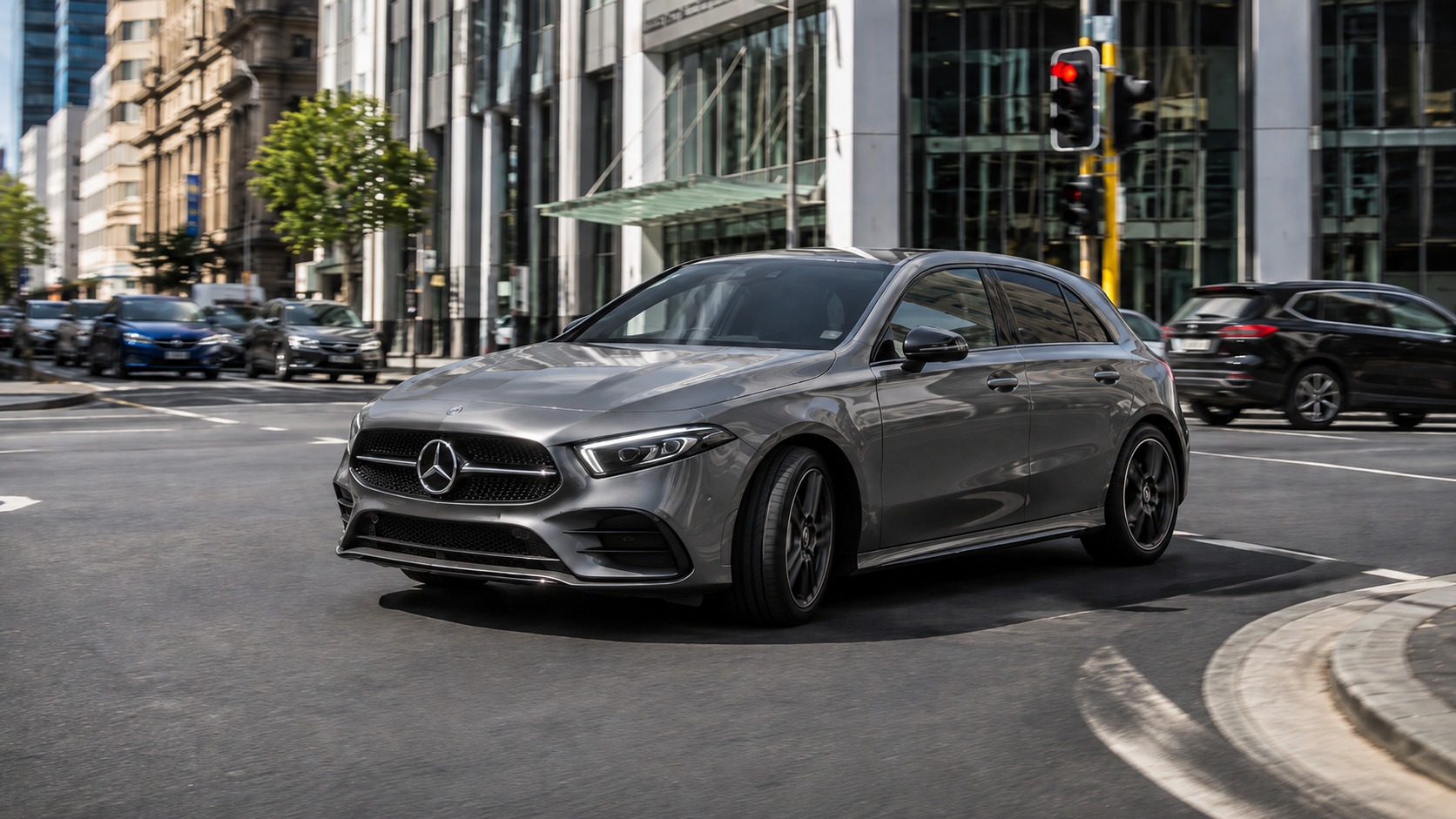
Ask someone what their car costs to run and they will tell you what they spend at the pump. Almost nobody mentions depreciation — which is odd, because for most New Zealand households it is the single largest cost of owning a vehicle, often by a wide margin.
Depreciation is the bill you pay without opening your wallet. You only see it once, on the day you sell.
What depreciation actually is
It is the difference between what you paid for a car and what it is worth when you let it go, spread across the years you owned it. No invoice arrives. No direct debit leaves your account. It simply removes money from your net worth quietly, month after month.
Two things drive it:
- Age and distance. Every year and every 10,000 km reduces value on a curve that is steepest when the car is new and flattens as it ages.
- Demand. Two cars of identical age and mileage can depreciate very differently, because the used market wants one of them more than the other. This is where model choice earns or loses you thousands.
The most important shape to understand: a new car typically loses the largest share of its value in the first two to three years. A car bought at seven years old and sold at twelve loses far less in dollars, even if the percentage drop looks similar.
Three realistic cars, five years each
Assumptions. All three bought used, held five years, driven 12,000 km a year (60,000 km total), petrol at $2.75/L, servicing and insurance at typical New Zealand estimates. Resale values are informed estimates based on how these classes of vehicle have behaved in the New Zealand market — not guarantees.
Car A — the $6,000 bargain
A twelve-year-old European hatchback. Cheap to buy, thirsty-ish, and out of warranty in every sense.
| Cost over 5 years | Amount |
|---|---|
| Purchase price | $6,000 |
| Value after 5 years (estimate) | $2,000 |
| Depreciation | $4,000 |
| Fuel at 8.0 L/100km | $13,200 |
| Servicing | $3,600 |
| Repairs and wear items (estimate) | $6,500 |
| Insurance | $4,000 |
| WoF and registration | $1,200 |
| Total cost of ownership | $32,500 |
| Cost per km | $0.54 |
Car B — the sensible used Japanese hatch
A five-year-old mainstream small car with a strong reliability record.
| Cost over 5 years | Amount |
|---|---|
| Purchase price | $19,000 |
| Value after 5 years (estimate) | $10,500 |
| Depreciation | $8,500 |
| Fuel at 6.2 L/100km | $10,230 |
| Servicing | $2,900 |
| Repairs and wear items (estimate) | $2,200 |
| Insurance | $4,600 |
| WoF and registration | $1,200 |
| Total cost of ownership | $29,630 |
| Cost per km | $0.49 |
Car C — the near-new SUV
A two-year-old mid-size SUV, still inside the steep part of the curve.
| Cost over 5 years | Amount |
|---|---|
| Purchase price | $42,000 |
| Value after 5 years (estimate) | $22,000 |
| Depreciation | $20,000 |
| Fuel at 7.6 L/100km | $12,540 |
| Servicing | $3,600 |
| Repairs and wear items (estimate) | $1,200 |
| Insurance | $6,400 |
| WoF and registration | $1,200 |
| Total cost of ownership | $44,940 |
| Cost per km | $0.75 |
What the numbers show
The $6,000 car is not the cheapest car. It has the lowest depreciation of the three in dollar terms — there is very little value left to lose — but it makes that back in fuel and repairs, and ends up costing more over five years than a car that cost three times as much to buy. Buying the cheapest car is often the most expensive decision.
Depreciation is the largest single line in the near-new SUV, at $20,000, or about $333 a month. That is more than its fuel, servicing and insurance combined. The owner will never receive a bill for it and will probably describe the car as economical.
For the sensible middle option, depreciation and fuel are within touching distance — $8,500 against $10,230. This is the sweet spot most New Zealand buyers are looking for without knowing it: past the steep part of the depreciation curve, still young enough to be reliable.
Why buyers fixate on fuel
Because fuel is visible. You stand there watching the numbers climb, once a week, in public. Depreciation happens silently in the background and only presents itself when you trade in — at which point most people blame the dealer's offer rather than the maths.
There is also a psychological trap in the comparison itself. Saving 2 L/100km feels like a decision you have made. Choosing a model that holds its value feels like luck. It is not luck; it is research.
What actually protects resale value in New Zealand
Evidence-based, from consistent patterns in the local used market:
- Brand and model demand. Toyota and, in the SUV and ute segments, a handful of consistently sought-after models hold value noticeably better than the class average.
- Drivetrain suited to the market. Hybrids and efficient petrols have held up well. Very large-engined petrol vehicles have been more exposed.
- Mainstream colours. White, silver and grey sell fastest. An unusual colour costs you at resale even if it costs nothing at purchase.
- Verifiable service history. A complete record is worth real money and costs nothing to maintain if you keep the invoices.
- Distance travelled. Sitting under psychologically important thresholds — 100,000 km, 150,000 km — matters more than it logically should.
- NZ-new vs import. NZ-new cars generally attract a modest premium at resale, partly offsetting their higher purchase price.
- Condition. Straight panels, clean interior, no smoke, tidy tyres. Presentation swings the final few thousand.
Practical buying advice
- Buy on the flat part of the curve. Three to six years old is where someone else has absorbed the steepest loss and the car still has plenty of life ahead.
- Estimate resale before you buy, not after. Look up what that exact model, five years older, sells for today. That is your depreciation forecast, and it is far more reliable than a fuel economy figure.
- Compare total cost, not sticker price. Purchase price minus expected resale, plus fuel, insurance, servicing, repairs, WoF and registration, over the years you will actually own it.
- Divide by the kilometres you will actually drive. Cost per kilometre is the honest scoreboard.
- Do not over-buy the "reliable brand" premium. Popular models cost more to buy precisely because they hold value; the two partly cancel out. It is a benefit, not a free lunch.
- Keep the paperwork. Every service invoice is a small deposit into your resale value.
AutoMatch Verdict
There is no single car that is cheapest for everyone — but there is a clear pattern in who suits what.
- If you drive very little, under about 6,000 km a year: depreciation dominates your costs entirely. Buy older and cheaper; fuel economy is close to irrelevant at that distance.
- If you drive an average 10,000–15,000 km a year: the three-to-six-year-old mainstream option is usually the lowest total cost. Boring, correct.
- If you drive over 25,000 km a year: fuel finally overtakes depreciation. Now efficiency genuinely earns its premium, and a hybrid or efficient diesel deserves serious consideration.
- If you change cars every three years: depreciation is your dominant cost by a distance. Buy the model with the strongest resale record you can find, in a sensible colour, and keep every invoice.
- If you keep cars for a decade: depreciation matters far less. Prioritise reliability and cheap parts, because maintenance becomes the main event.
- If the budget is genuinely tight: avoid the false economy of a very cheap, complex, out-of-warranty European car unless you can do the work yourself. The purchase price is the smallest number in that ownership.
Run your own version of these tables before you commit. It takes twenty minutes and it is worth more than any amount of scrolling through listings.
Good decisions start with good information. Great ones start with AutoMatch.
Know what you want? Let's find it.
Tell AutoMatch what you're looking for and let the dealer network respond with suitable vehicles.
Related reading
Best station wagons in NZ 2026: 7 used wagons worth buying
Seven used station wagons compared for price, boot space, rear-seat room, fuel economy, safety and everyday practicality in New Zealand.
Find me a car in New Zealand — without searching every listing
Know the car you want, or have a shortlist? Tell AutoMatch once, let the dealer network respond with actual vehicles, and compare the strongest matches.
Best cars for older drivers in New Zealand
Easy to get into, easy to see out of, easy to park and easy to own. Six vehicles worth a look on the New Zealand market, plus the features and checks that actually matter.