

EVs & Hybrids
Are hybrids still worth paying extra for?
7 min read
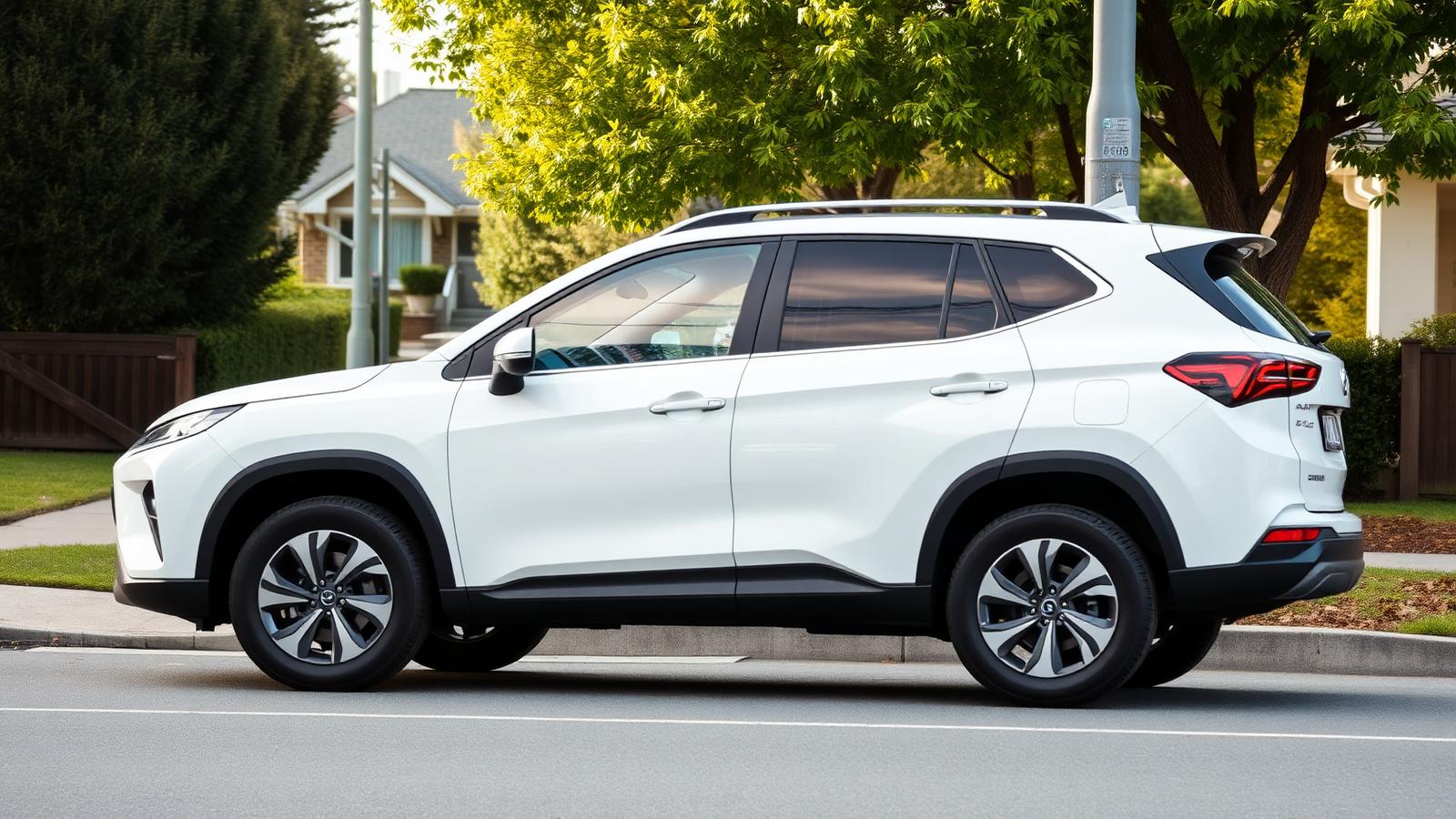
Everyone has an opinion on hybrids. Few have done the maths.
The usual argument stops at fuel: hybrids use less, therefore hybrids win. That ignores the two numbers that actually decide it — what you pay extra up front, and what the market pays you back at resale. So let us run it properly.
The setup
Assumption. Two versions of the same mainstream mid-size SUV, bought used at three years old, held for five years. Same body, same equipment level, different drivetrain. These are realistic New Zealand market figures at the time of writing, not quotes.
| Assumption | Petrol | Hybrid |
|---|---|---|
| Purchase price | $28,000 | $31,500 |
| Real-world consumption | 8.4 L/100km | 5.2 L/100km |
| Petrol price (assumed average) | $2.75/L | $2.75/L |
| Annual servicing (estimate) | $520 | $520 |
| Annual insurance (estimate) | $1,050 | $1,120 |
| Value after 5 more years | 42% of price | 47% of price |
Two notes before the numbers.
Fuel prices move. At $2.30/L the hybrid case weakens by roughly a quarter; at $3.20/L it strengthens by about the same. Every figure below scales with the pump price.
Servicing is closer than people expect. Modern hybrid systems are well proven, and regenerative braking genuinely extends brake life. The scare stories usually concern battery replacement, which is rare within this ownership window on a car of this age and typically shows up as gradual capacity loss rather than a sudden failure.
Five years at 8,000 km a year
The low-distance retiree or second-car scenario.
| Cost over 5 years | Petrol | Hybrid |
|---|---|---|
| Fuel (40,000 km) | $9,240 | $5,720 |
| Depreciation | $16,240 | $16,695 |
| Servicing | $2,600 | $2,600 |
| Insurance | $5,250 | $5,600 |
| Total | $33,330 | $30,615 |
| Cost per km | $0.83 | $0.77 |
The hybrid is about $2,700 ahead — and almost all of that comes from fuel, not from the drivetrain being cheaper to own. If your driving is short, cold, urban trips, the real-world gap is often wider than the table suggests, because that is exactly where a petrol engine is least efficient and a hybrid is most.
Five years at 15,000 km a year
The New Zealand average household car.
| Cost over 5 years | Petrol | Hybrid |
|---|---|---|
| Fuel (75,000 km) | $17,325 | $10,725 |
| Depreciation | $16,240 | $16,695 |
| Servicing | $2,600 | $2,600 |
| Insurance | $5,250 | $5,600 |
| Total | $41,415 | $35,620 |
| Cost per km | $0.55 | $0.47 |
Nearly $5,800 in the hybrid's favour, or roughly $97 a month. At this distance the hybrid premium pays itself back in a little over two and a half years, and everything after that is profit.
Five years at 25,000 km a year
The commuter, the rep, the rural family.
| Cost over 5 years | Petrol | Hybrid |
|---|---|---|
| Fuel (125,000 km) | $28,875 | $17,875 |
| Depreciation | $16,240 | $16,695 |
| Servicing | $3,900 | $3,900 |
| Insurance | $5,250 | $5,600 |
| Total | $54,265 | $44,070 |
| Cost per km | $0.43 | $0.35 |
Over $10,000 apart. At high distance the answer is not close.
One caveat that matters here: if most of those kilometres are open-road at 100 km/h, the hybrid's advantage shrinks materially, because there is little braking energy to recover. A hybrid doing 25,000 km of motorway may return closer to 6.0 L/100km than 5.2, which trims the five-year gap by roughly $2,700. Still a win, just a smaller one.
Where the break-even actually sits
Calculation. On the $3,500 purchase premium above, and a fuel saving of about 8.8 cents per kilometre:
- Break-even distance: roughly 40,000 km
- At 8,000 km/year: about 5 years
- At 15,000 km/year: about 2 years 8 months
- At 25,000 km/year: about 1 year 7 months
If you keep cars for three years and drive under 10,000 km annually, the hybrid premium may not fully repay itself in fuel alone — though stronger resale usually closes most of the gap anyway. Everyone else is comfortably in front.
Depreciation: the quiet argument for hybrids
Depreciation is the bill you pay without opening your wallet, and it is the largest line in every table above.
Observation, not a guarantee. Hybrid variants of popular models have generally held value at least as well as their petrol equivalents in New Zealand, and in some cases better, because used demand is strong and supply of well-kept examples is limited. The premium you pay is therefore only partly "spent" — a share of it is stored in the car and returned at resale.
The counter-risk is honest: battery state of health increasingly influences used values. A high-mileage hybrid with a tired pack will be discounted. Ask for a battery health reading before you buy, not after.
What about Road User Charges?
Current rules. Conventional petrol hybrids pay fuel excise at the pump like any petrol vehicle. Light electric vehicles and plug-in hybrids pay Road User Charges. A regular hybrid does not sit in the RUC system, so no additional charge applies to the comparison above.
Proposed changes. Government has signalled an intention to move the whole light vehicle fleet from fuel excise onto a distance-based RUC system over the coming years. The stated design is revenue-neutral for the average motorist, but the detail — rates, timing and how excise is unwound — has not been finalised.
Possible impact. If petrol vehicles eventually pay RUC per kilometre instead of excise per litre, part of the hybrid advantage disappears, because a hybrid's saving comes from burning fewer litres, not from travelling fewer kilometres. Under a full distance-based system, the remaining hybrid saving would be the fuel component only. Do not build a ten-year plan around today's rules; confirm the current position on the NZTA website before you buy.
Things the spreadsheet does not capture
- Refinement. Hybrids are quiet and smooth in traffic. Genuinely pleasant, not measurable.
- Complexity. More systems to eventually fail, though reliability records are good.
- Towing. Many hybrids have lower braked towing capacity than their petrol siblings. If you tow, check the rating before you get near a cost calculation.
- Import spec. Japanese used hybrids may have different equipment and, occasionally, battery cooling arrangements suited to a different climate.
AutoMatch Verdict
Hybrids are still worth paying extra for — for most New Zealand buyers, most of the time. But "most" is doing real work in that sentence.
- If you drive under 8,000 km a year and change cars every three years: the premium is unlikely to repay itself in fuel. Buy the hybrid for the driving experience, not the spreadsheet.
- If you drive 10,000–20,000 km a year, mostly urban and suburban: clear win. Break-even lands inside three years and the saving is worth roughly $80–$100 a month.
- If you drive over 20,000 km a year in town: the strongest case of all. Around $10,000 over five years.
- If you drive over 20,000 km a year, almost all open-road: still ahead, but by less. A modern efficient petrol or diesel deserves a look, especially if you tow.
- If you tow regularly or need serious load capacity: check the towing rating first; it may decide the question for you.
- If you can charge at home and your daily distance is short: compare against a plug-in hybrid or full EV before committing — that is a different calculation again.
Every figure here is a model, not a quote. Change the fuel price, the annual distance or the purchase premium and the answer moves — which is exactly the point. Run it on your own numbers before you decide.
You've done the homework. Now let the right car find you.
Know what you want? Let's find it.
Tell AutoMatch what you're looking for and let the dealer network respond with suitable vehicles.
Related reading
EV, hybrid or plug-in hybrid: which one actually fits your driving?
The drivetrain decision is settled by where you park at night, not by which technology sounds best. Real New Zealand running costs, battery health checks and honest trade-offs.
Best station wagons in NZ 2026: 7 used wagons worth buying
Seven used station wagons compared for price, boot space, rear-seat room, fuel economy, safety and everyday practicality in New Zealand.
Find me a car in New Zealand — without searching every listing
Know the car you want, or have a shortlist? Tell AutoMatch once, let the dealer network respond with actual vehicles, and compare the strongest matches.