

EVs & Hybrids
EV, hybrid or plug-in hybrid: which one actually fits your driving?
6 min read
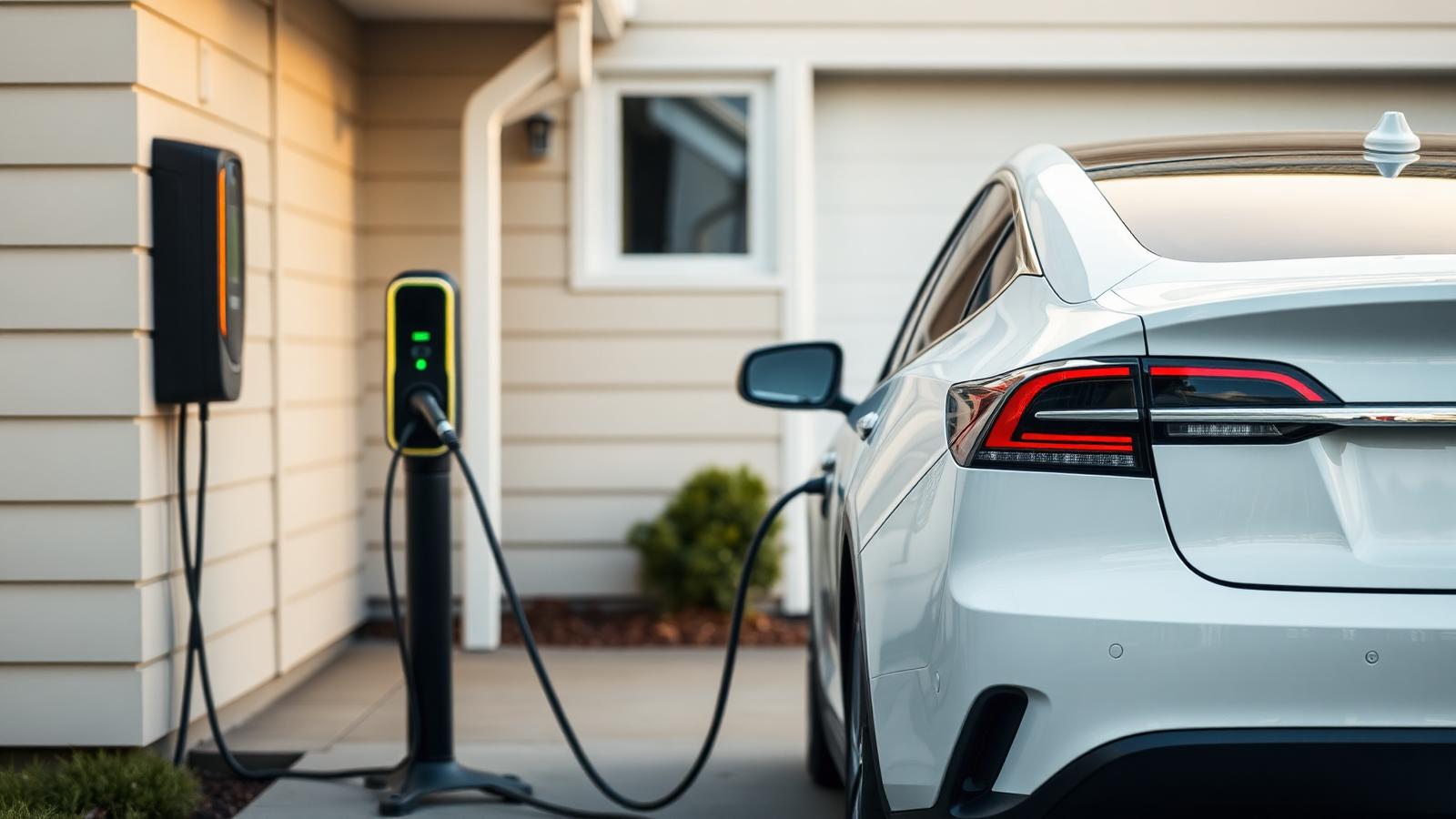
The drivetrain question trips up more New Zealand buyers than any other. The three options solve different problems, and the right answer depends far more on where you park at night than on which technology sounds best.
Start with one question: can you charge at home?
If you have off-street parking and can install a charger, a full EV becomes genuinely practical. Overnight charging on a home or off-peak tariff is the cheapest energy most drivers will ever put into a car, and you start every day full.
If you park on the street or in a shared building without charging, an EV means relying on public infrastructure. Workable in the main centres, but it adds friction to daily life — and public rapid charging typically costs three to four times the home rate, which erases much of the running-cost advantage. In that situation a conventional hybrid usually makes more sense than either an EV or a plug-in.
What each one actually costs to run
Assumptions. Petrol $2.75/L, home electricity $0.25/kWh, public rapid charging $0.85/kWh, RUC at recent light-vehicle rates. Confirm current RUC rates on the NZTA website.
| Drivetrain | Energy per km | RUC per km | Total per km | 15,000 km/year |
|---|---|---|---|---|
| Petrol, 8.0 L/100km | $0.220 | in fuel price | $0.220 | $3,300 |
| Hybrid, 5.0 L/100km | $0.138 | in fuel price | $0.138 | $2,070 |
| PHEV, charged daily | $0.070 | $0.038 | $0.108 | $1,620 |
| PHEV, never charged | $0.190 | $0.038 | $0.228 | $3,420 |
| EV, home charging | $0.043 | $0.076 | $0.119 | $1,785 |
| EV, public rapid only | $0.145 | $0.076 | $0.221 | $3,315 |
Two lines in that table are worth staring at. A plug-in hybrid that never gets plugged in is the most expensive option on the list. And an EV run entirely on public rapid charging costs about the same as a petrol car — the technology did not fail, the charging arrangement did.
Conventional hybrid
Never plugs in. Recovers energy under braking and uses it at low speed, which is why hybrids shine in town and matter far less on the open road.
Suits: urban and suburban drivers, anyone without home charging, buyers who want lower fuel cost without changing how they refuel.
Watch: the saving on long highway runs is smaller than the city figure suggests. Expect real-world consumption closer to 6.0 L/100km than 5.0 on sustained open-road driving.
Depreciation note. Hybrid variants of popular models have generally held value at least as well as their petrol equivalents in New Zealand, so part of the purchase premium comes back at resale.
Plug-in hybrid (PHEV)
A usable electric-only range — often enough for a typical commute — then it runs as a hybrid beyond that. Charged daily, it behaves like an EV most of the time. Never charged, it is a heavier, thirstier hybrid carrying a battery it does not use.
Suits: buyers with home charging whose weekly driving is short but who take regular long trips, and households that cannot yet commit to a full EV.
Watch: RUC applies regardless of how you drive it. Used PHEV values have been softer than both hybrids and EVs in some segments, so check what your specific model has done in the local market before assuming resale will be kind.
Full EV
Suits: home chargers, predictable daily distances, and households with a second vehicle for the occasional long haul.
Watch: real-world range in New Zealand conditions is usually below the official figure — particularly in winter, at open-road speeds, or climbing. Plan around roughly 70–80% of the rated figure and you will rarely be caught out.
Depreciation is the real EV risk, not running cost. Rapid model improvement and changing incentives have made used EV values less predictable than for petrol equivalents. Check what the model you are considering sold for two years ago compared with today. That number tells you more about your total cost than any efficiency figure.
Battery health on used imports
Most used EVs and hybrids sold here arrive from Japan. Battery capacity degrades with age and use, and two same-year cars can differ significantly.
Before you buy:
- request a state of health (SoH) reading, not just the dashboard range estimate
- ask how the car was charged — heavy rapid-charging use accelerates degradation
- check whether any manufacturer battery warranty transfers to a New Zealand owner
- take a test drive long enough for the range estimate to settle under real conditions
An independent pre-purchase inspection including a battery report costs very little relative to the risk. On a $25,000 EV, a $200 battery check is the cheapest insurance you will ever buy.
Road user charges: current and proposed
Current rules. Light EVs and plug-in hybrids pay RUC. Conventional petrol hybrids do not — they pay excise at the pump.
Proposed. Government has signalled moving the whole light fleet onto distance-based RUC and unwinding fuel excise. Rates, timing and design are not settled.
Possible impact. If it proceeds, efficiency saves you litres but not kilometres, so the relative advantage of hybrids over petrol narrows while EVs and PHEVs stop being singled out. Buy for today's rules; make sure the car still makes sense if they change.
AutoMatch Verdict
There is no single best drivetrain — only the one that matches your parking, your distance and your patience.
- No home charging, mostly city driving: conventional hybrid. Cheapest to run without changing anything about your life.
- Home charging, predictable daily distances, second car available: full EV. Lowest running cost by a clear margin; do your homework on resale.
- Home charging, short weekday commute, regular long trips: plug-in hybrid — but only if you will genuinely plug it in every day.
- No home charging and considering a PHEV: don't. You would pay the RUC and carry the battery weight while running on petrol.
- Very high annual distance, rural, or towing: run the numbers carefully. A modern efficient petrol or diesel may still win, especially once towing ratings are considered.
- Changing vehicles every three years: weight your decision toward resale history rather than fuel savings. At that ownership length, depreciation decides it.
Whichever way you lean, compare total cost over the years you will actually own the car — purchase price, energy, RUC where it applies, servicing and expected resale — rather than the per-kilometre energy cost alone.
Hours of research. One simple next step.
Know what you want? Let's find it.
Tell AutoMatch what you're looking for and let the dealer network respond with suitable vehicles.
Related reading
Are hybrids still worth paying extra for?
Everyone has an opinion on hybrids. Few have done the maths. Here is the five-year New Zealand calculation at 8,000, 15,000 and 25,000 km a year — including depreciation.
Best station wagons in NZ 2026: 7 used wagons worth buying
Seven used station wagons compared for price, boot space, rear-seat room, fuel economy, safety and everyday practicality in New Zealand.
Find me a car in New Zealand — without searching every listing
Know the car you want, or have a shortlist? Tell AutoMatch once, let the dealer network respond with actual vehicles, and compare the strongest matches.