

Legislation
Road User Charges explained for New Zealand drivers
5 min read
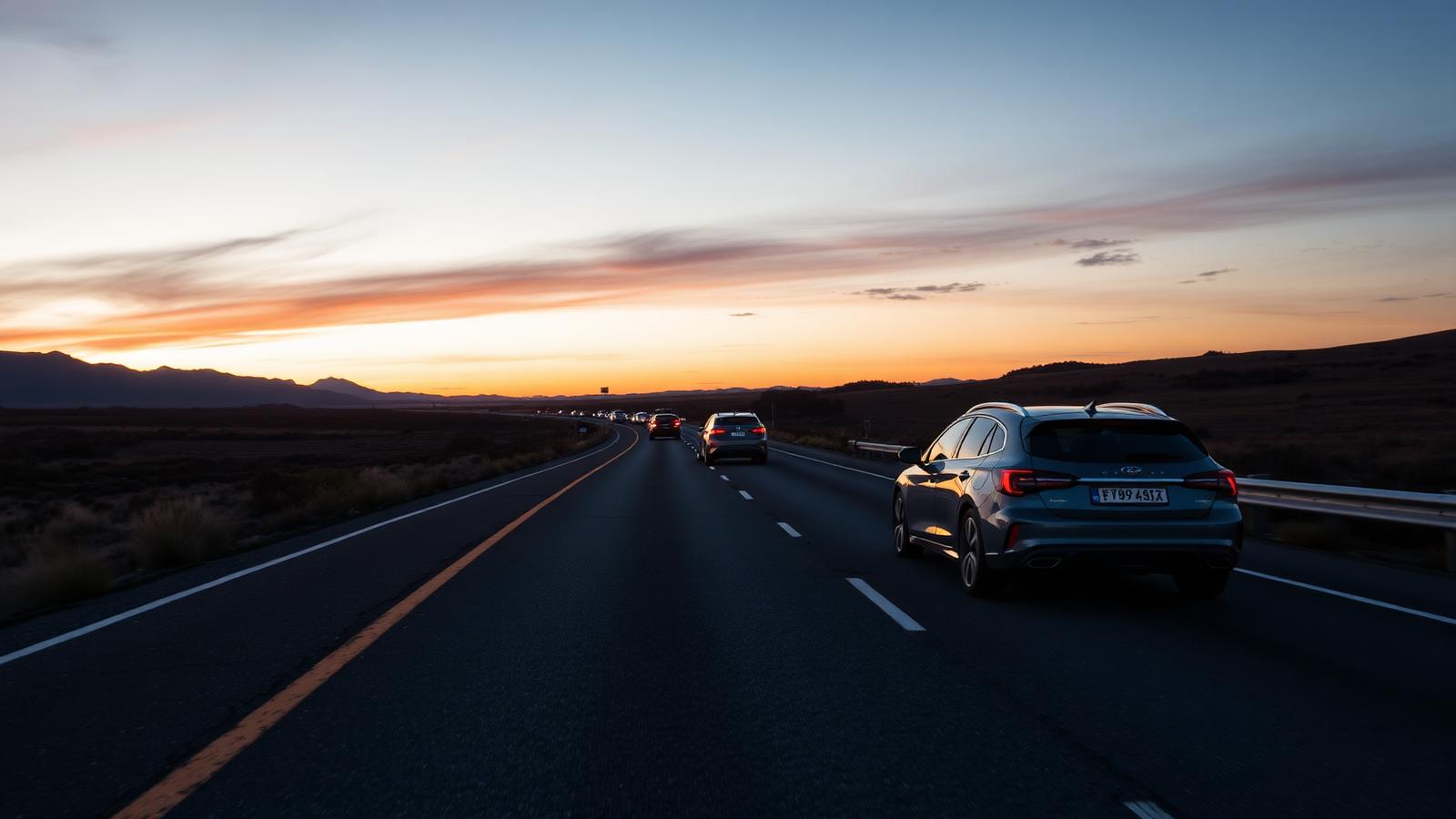
Every vehicle on a New Zealand road pays for that road. The only question is whether you pay at the pump or by the kilometre — and increasingly, the answer is by the kilometre.
If you are shopping for a diesel, an EV or a plug-in hybrid, Road User Charges are not paperwork. They are a running cost, and leaving them out of your comparison will flatter exactly the wrong car.
Current rules: who pays what
Fact. Petrol vehicles pay Fuel Excise Duty, built into the price per litre. You never see it as a separate bill, which is precisely why it feels like it does not exist.
Fact. Vehicles that do not pay excise pay RUC instead, purchased in advance in units of 1,000 km. That currently covers:
- diesel vehicles of any age
- light electric vehicles
- plug-in hybrid electric vehicles
Fact. Conventional petrol hybrids — the kind that never plug in — pay excise at the pump like any petrol car. No RUC applies.
Rates change, so treat any figure as a snapshot. As a working estimate for a light vehicle under 3,500 kg, RUC has recently sat in the order of $76 per 1,000 km, with light EVs charged at the light diesel rate and PHEVs at a reduced rate to account for the petrol excise they already pay. Confirm the current rate on the NZTA website before you rely on it.
What that means per kilometre
Calculation, using the rates above as an assumption.
| Vehicle | Energy cost per km | RUC per km | Total per km |
|---|---|---|---|
| Petrol, 8.0 L/100km at $2.75/L | $0.220 | included in fuel | $0.220 |
| Petrol hybrid, 5.2 L/100km | $0.143 | included in fuel | $0.143 |
| Diesel, 6.5 L/100km at $2.05/L | $0.133 | $0.076 | $0.209 |
| EV, 17 kWh/100km at $0.25/kWh home rate | $0.043 | $0.076 | $0.119 |
Two things fall out of that table.
Diesel is far less of a bargain than the pump price suggests. Once RUC is added, a modern diesel often lands close to a petrol equivalent on energy cost alone — before you account for higher purchase price and typically dearer servicing.
An EV charged at home is still comfortably the cheapest to fuel, even paying RUC. At 15,000 km a year, the EV in that table costs about $1,785 to run against $3,300 for the petrol — a saving of roughly $1,500 a year. Whether that repays the purchase premium is a separate calculation, and depreciation usually decides it.
Buying and managing RUC
You buy distance in advance, online through NZTA or via agents, and the licence is recorded against the vehicle. Your odometer must stay behind the distance you have purchased.
Practical points:
- RUC is tied to the vehicle, not the driver. When you buy a used diesel or EV, check the RUC balance as part of the handover. Inheriting a vehicle that is 3,000 km overdue means inheriting the bill.
- Buying in advance is not a discount. More distance up front avoids running out; it does not reduce the rate.
- Running out is expensive. Unpaid distance is recoverable, and penalties apply. Set a reminder rather than relying on memory.
- Refunds exist for genuine off-road distance, but the record-keeping requirements are real and rarely worth it for an ordinary household.
Proposed changes: read this before you make a ten-year plan
Current position. Petrol vehicles pay excise; diesels, EVs and PHEVs pay RUC. That is the law today.
Proposed. Government has signalled an intention to transition the entire light vehicle fleet from fuel excise to distance-based Road User Charges. The stated rationale is that fuel excise raises less as vehicles become more efficient and more of the fleet electrifies.
Not yet settled. Timing, the rate structure for petrol vehicles, how excise is unwound, and whether rates vary by vehicle weight or type are all still subject to policy decisions and legislation.
Possible impacts if it proceeds as signalled:
- Petrol vehicles would pay by the kilometre rather than by the litre, so the cost advantage of a highly efficient petrol or hybrid would narrow. Efficiency saves litres; it does not save kilometres.
- The relative penalty currently felt by diesel and EV owners largely disappears, because everyone would be in the same system.
- Total cost would depend far more on how far you drive and far less on what you drive.
What to do with that today. Do not buy a car in 2026 on the assumption of a 2030 tax settings. Buy for the rules that exist, sanity-check that the vehicle still makes sense if the rules change, and confirm current rates before you sign anything.
What to ask before you buy
- What is the current RUC balance, and how far ahead of the odometer is it?
- Has the vehicle been operated off-road with RUC refunds claimed, and is the paperwork consistent with the odometer?
- For a plug-in hybrid: does the buyer understand that RUC applies regardless of how much of their driving is electric — and will they actually plug it in?
- For a diesel: at your annual distance, does the fuel saving still beat the petrol equivalent once RUC and servicing are added?
AutoMatch Verdict
RUC is not a reason to avoid a vehicle. It is a reason to do the arithmetic properly.
- If you drive under 10,000 km a year: RUC is a modest cost — roughly $760 a year at current light rates — and rarely changes which car is right for you.
- If you drive over 20,000 km a year in a diesel: RUC is a genuine line item at around $1,500-plus annually. Compare against a hybrid before assuming diesel is cheaper.
- If you can charge an EV at home: RUC still leaves you well ahead on energy cost. The decision hinges on purchase price and resale, not on RUC.
- If you are considering a PHEV without home charging: you will pay RUC while running mostly on petrol. That is the worst of both systems.
- If you are buying used: check the RUC balance at handover. Every time.
Rates and rules move. The maths does not — so run it on the day you buy, using the figures published by NZTA rather than the ones in any article, including this one.
Good decisions start with good information. Great ones start with AutoMatch.
Know what you want? Let's find it.
Tell AutoMatch what you're looking for and let the dealer network respond with suitable vehicles.
Related reading
Best station wagons in NZ 2026: 7 used wagons worth buying
Seven used station wagons compared for price, boot space, rear-seat room, fuel economy, safety and everyday practicality in New Zealand.
Find me a car in New Zealand — without searching every listing
Know the car you want, or have a shortlist? Tell AutoMatch once, let the dealer network respond with actual vehicles, and compare the strongest matches.
Best cars for older drivers in New Zealand
Easy to get into, easy to see out of, easy to park and easy to own. Six vehicles worth a look on the New Zealand market, plus the features and checks that actually matter.