

Buying advice
Best cars for older drivers in New Zealand
12 min read
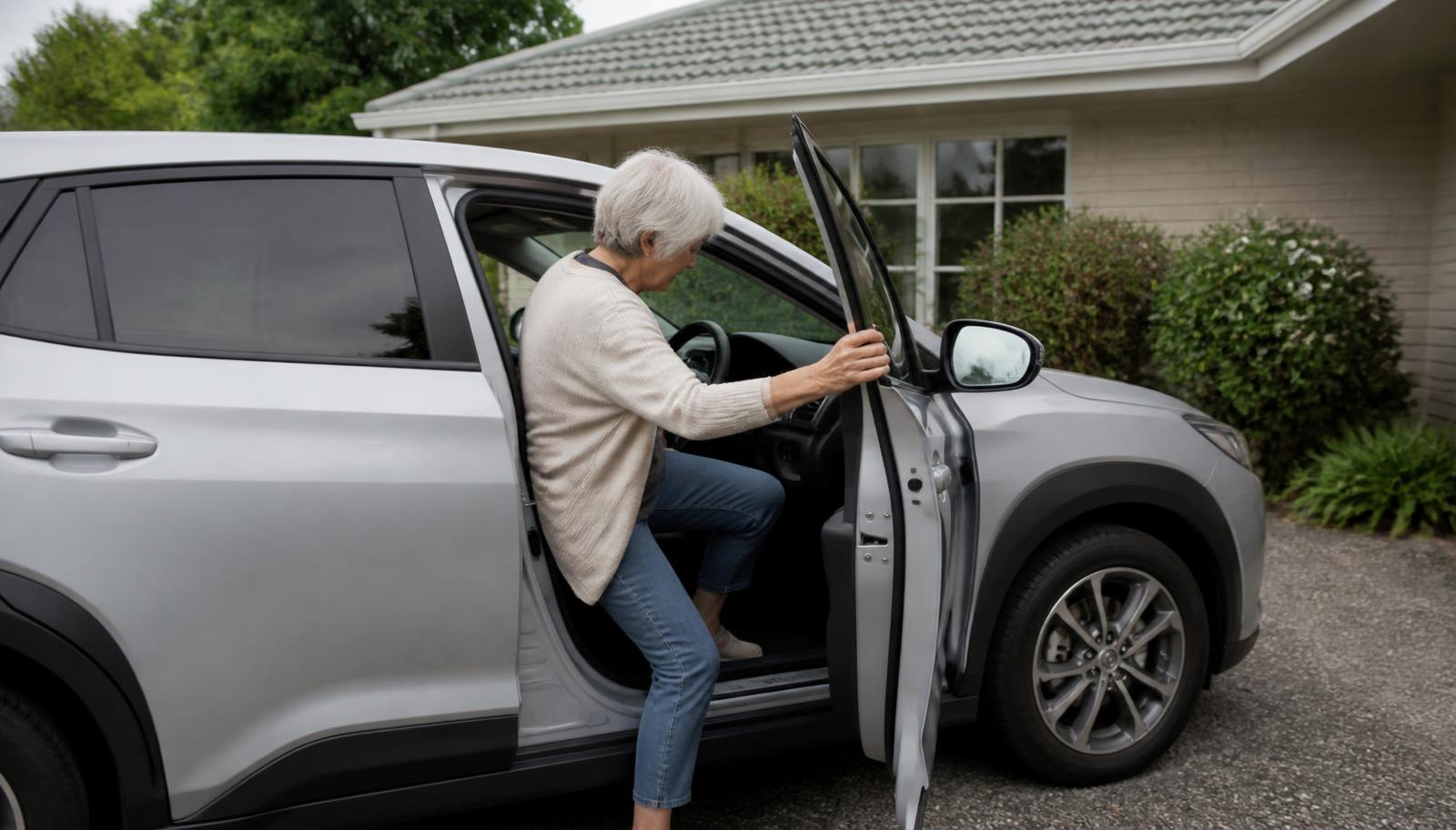
Buying a car later on tends to reorder the priority list. Getting in and out comfortably can matter more than how quickly the thing accelerates. A clear view out can matter more than large wheels. Reliability and low-fuss ownership move up the list, and the size of the boot matters less than whether you can lift something into it.
Depreciation is worth a mention here, because we usually bang on about it. If you change cars every three years, resale value is one of the biggest costs you'll ever pay. If you're buying something you intend to keep for eight or ten years, that maths softens: comfort, suitability and reliability reasonably deserve more weight than squeezing out the best possible trade-in figure one day. It still isn't nothing — it's just no longer the loudest voice in the room.
What follows is what to look for, six vehicles worth considering, and a short test to do before you sign anything.
The get-in, get-out test
The most common assumption is that higher is easier. It isn't automatically.
Sit too low and you drop down into the seat and have to push yourself back up out of it. Sit too high and you're climbing up into the vehicle and stepping down out of it. Somewhere between those two, there's a height where you more or less turn and sit — hips roughly level with the seat, no drop, no climb. Where that point sits depends entirely on your height, your knees and your hips, which is why a model that suits one person is awkward for another.
Three things decide it:
- Seat height relative to your hips when you're standing beside the car.
- The door opening — how wide it swings and whether the roofline forces you to duck.
- The sill, the strip of body you swing your leg over between the door and the seat. A high or wide sill is the part people most often underestimate.
The NZ Transport Agency makes the same point in its guidance on choosing a safe vehicle for seniors, noting that a low door threshold can make getting in and out easier by reducing how far you have to lift a leg over the sill. Its other suggestions are worth borrowing wholesale: a vehicle that fits you, an adjustable steering wheel and seat, electric mirrors, large or wide-angle mirrors, reversing assistance, and a strong safety rating.
None of this can be judged from a listing photo. Before you fall for a particular model, get into it and out of it several times, and try the passenger side too — you'll spend time in that seat as well, and it isn't always the same experience.
What actually matters
Entry and exit. Seat height, door opening, sill. Covered above, and it's the one most worth being fussy about.
Visibility. How much you can see forward, over your shoulder and behind. Thick rear pillars and a high boot line make reversing harder no matter how good the camera is. Big, properly adjustable mirrors help. A reversing camera helps more.
Manoeuvrability. A larger SUV is not automatically a better one. A shorter, narrower vehicle with a tight turning circle is far easier in a supermarket car park, a narrow driveway or a tight garage — and those are the manoeuvres you actually do every week.
Safety. ANCAP ratings are the useful reference point in New Zealand, and Rightcar collects safety information for vehicles sold here. One catch: the tests get harder over time, so a five-star rating from 2015 is not the same achievement as a five-star rating today. Compare ratings from the same era, and check what's actually fitted to the specific car rather than what the brochure said was available.
Reliability and long-term ownership. "Toyota good, Honda reliable" is too blunt to be useful. The particular model year, engine and gearbox matter, and so does whether this specific car has been serviced properly. A well-maintained example of an average car usually beats a neglected example of a good one.
Controls. You should be able to change the temperature or the radio station without going hunting through menus. A large touchscreen is a feature, not an advantage. Physical knobs for volume and climate age extremely well.
Comfort. If you're keeping the car for years, the seat and driving position matter more than almost anything else. Check the seat adjusts far enough for you, that the steering wheel moves both in and out and up and down, and that you're not sitting at an angle to the pedals.
Cars worth considering
Six vehicles that fit the brief in different ways. These aren't ranked, because the right one depends on what you need.
Toyota Corolla Cross — the strong all-rounder
Why it could suit. A crossover that's genuinely manageable in size, with a raised seating position without the bulk of a proper medium SUV. Petrol and hybrid versions are available. Its 2022 ANCAP rating — which applies to all variants except the GR Sport — is a strong current-protocol result: 85% adult occupant protection, 88% child occupant protection, 87% vulnerable road user protection and 83% safety assist, with autonomous emergency braking, junction assistance and lane support standard on rated variants.
What to watch. It arrived here in late 2022, so it's still new. Used examples are priced accordingly, and there simply isn't a long used-ownership record to draw on yet. You're paying for recency and current safety equipment.
Best for. Someone who wants one of the newest options on this list, with strong current-generation safety technology, and has the budget for it.
Kia Seltos — space without going huge
Why it could suit. The numbers explain the appeal: Kia New Zealand lists 4,385 mm long, 1,800 mm wide, a 5.3 m minimum turning radius, and 433–468 litres of boot space depending on specification. That's a tidy footprint with a properly useful boot behind it, and the current NZ range is front-wheel drive with a 2.0-litre petrol engine and an IVT automatic.
What to watch. Equipment and safety specification vary quite a bit between grades and model years, so check the exact car rather than assuming every Seltos is identically equipped. Separately, some overseas-market 2020–2022 2.0-litre Seltos vehicles were recalled over piston oil rings that could cause abnormal oil consumption and, in some cases, engine damage. That does not mean every New Zealand Seltos is affected — check the VIN, the recall history and the service record of the actual vehicle.
Best for. Someone who wants boot space and a car-park-friendly size at the same time.
Suzuki Vitara — the straightforward one
Why it could suit. Compact, unfussy and long-established on the used market, which means choice and comparatively friendly pricing. If the Corolla Cross is out of reach, a good Vitara puts you in the same broad shape of vehicle for considerably less.
What to watch. The 2015-era Vitara earned five ANCAP stars under the test protocol of the day — a genuine result at the time, but not equivalent to five stars under today's tougher tests. Equipment varies a lot by year and grade; useful items like blind-spot monitoring and rear cross-traffic warning appeared on later versions, so confirm what's fitted. Some overseas-market Vitara and S-Cross vehicles have also been subject to recall campaigns, including a brake booster check-valve issue, so check the VIN and recall status of the specific car.
Best for. Buyers who want the format without the newest-model price.
Honda HR-V — the compact used choice
Why it could suit. A raised body style without medium-SUV bulk, and there's an established used market here. Current NZ specifications are roughly 4,352 mm long and 1,790 mm wide, with 195 mm of ground clearance and a 5.5 m turning radius — easy to place on the road and easy to park.
What to watch. Don't assume every HR-V is a five-star car. The 2015–2022 generation was rated five stars under the older protocol, with AEB standard on versions built from July 2018; the current generation scored four stars under the tougher 2022 protocol. Both are respectable, they just aren't the same test. On used CVT automatics, there have been overseas Honda updates concerning belt deterioration on some 2016–2020 HR-Vs. This isn't a case of all HR-V CVTs failing, but it's a good reason to check service history, confirm which campaigns applied to that exact vehicle, and pay attention to any shuddering or hesitation on the test drive.
Best for. Someone who wants a small, easy-to-park crossover with plenty of used choice.
Subaru XV / Crosstrek — when all-wheel drive genuinely matters
Why it could suit. A raised crossover with all-wheel drive as standard in New Zealand, in a size that stays sensible — the current Crosstrek is about 4,495 mm long and 1,800 mm wide with 220 mm of ground clearance. If you live rurally, drive gravel regularly, head to the mountain in winter or simply want the extra security in poor weather, this is the one on the list built for it.
What to watch. Be honest about whether you need AWD. If your driving is suburban streets, the supermarket and sealed highways, you're paying for capability you'll rarely use — in purchase price, in fuel and in servicing. On the used side, some early 2.0-litre engines from the XV/Crosstrek era have documented excessive oil consumption concerns. It isn't every car, but check the exact year and engine, ask the seller directly about oil top-ups, look at the oil yourself, and be wary if it needs frequent topping up.
Best for. Gravel roads, winter trips and anyone who genuinely uses the traction.
Suzuki S-Cross — the quietly sensible alternative
Why it could suit. It rarely makes shortlists, which is a shame, because the specifications suit this brief well: Suzuki New Zealand lists 4,300 mm long, 1,785 mm wide, 1,585 mm high, 175 mm of ground clearance, a 5.4 m turning radius and roughly 430–440 litres of luggage space, with a six-stage automatic and both front-wheel drive and all-wheel drive available. Small outside, useful inside, and you're not forced into AWD to get the body style.
What to watch. It's a lower-profile choice, so there are fewer on the market and resale interest is narrower than a Toyota or Honda. As with the Vitara, check which safety equipment is actually fitted to the grade and year in front of you, and check recall status.
Best for. Someone who cares more about how the car works day to day than what the badge signals.
Found a few worth considering?
You don't need to search every listing yourself. Tell AutoMatch what you're looking for and let participating dealers put suitable vehicles forward.
Need something bigger?
Sometimes the honest answer is that a compact crossover isn't enough car. Grandchildren and their seats, a folding walker or wheelchair, a large dog, golf clubs, or luggage for a proper trip away — these are real reasons to step up to a medium SUV like a Honda CR-V, which offers noticeably more cabin and boot space in a body that's still straightforward to live with.
The test is simply whether you need the space. If you do, buy it. If you don't, a larger SUV isn't an upgrade — it's a bigger thing to park, more weight to stop, and often a higher step in and out. Bigger is only better when you're using it.
Features actually worth looking for
Plain English versions of the things worth paying for:
- Reversing camera. Shows what's behind you on a screen. The single most useful thing on this list.
- Parking sensors. Beep faster as you get closer to something. Front sensors as well as rear are a bonus in tight garages.
- Blind-spot warning. A light in the mirror when there's a car alongside you where you can't easily see it. Handy on motorway on-ramps.
- Rear cross-traffic alert. While you're reversing out of a supermarket park, it warns you about a car approaching from the side before you can see it.
- Automatic emergency braking. If the car senses you're about to hit something and you haven't reacted, it brakes. It's the reason modern safety ratings have improved.
- Good headlights. Underrated. If you regularly drive at night, decent headlights are worth prioritising.
- Mirrors that adjust electrically and are large enough to be useful.
- A seat and steering wheel that adjust properly — the wheel should move up and down and in and out, not just up and down.
- Keyless entry, if fiddling with a key while holding shopping is a nuisance.
- Simple climate and audio controls you can use without taking your eyes off the road.
Availability depends on the model year and grade, not just the badge. Two cars of the same model and year can have quite different equipment.
The five-minute dealership test
The internet can't tell you whether a car fits you. A vehicle can be well reviewed, well rated and completely wrong for your body. Five minutes on the forecourt settles it:
- Get into the driver's seat and back out three or four times. Note whether it's a turn-and-sit, a drop, or a climb.
- Do the same on the passenger side.
- Adjust the seat and steering wheel to where you'd actually have them, then check the fit again.
- Look around. Over your shoulder, out the back, at the mirrors. Are the pillars in your way?
- Reverse into a park. Use the camera. Decide whether you trust it.
- Put something into the boot and take it back out. A bag of potting mix, a suitcase, whatever you actually carry.
- Change the temperature and the radio station without asking anyone how.
If anything on that list is awkward in the car yard, it will still be awkward in three years. Cross it off and try the next one — there are plenty of good cars, and the one that suits you is a personal answer, not a universal one.
Whichever way you lean, the deciding vote belongs to five minutes in the driver's seat — not to a spec sheet, and not to us.
Ready to find your next car?
You don't have to settle on one particular model first. If you've decided an SUV is right for you, AutoMatch can start there.
Tell AutoMatch what you're looking for and let participating dealers put suitable vehicles forward. We show you the strongest matches against your request, and you choose who you want to contact.
Related reading
Do you really need a ute to tow a boat?
Looking for the best tow vehicle in NZ? Before buying a ute, work out what your boat really weighs. We compare wagons, SUVs, utes, hybrids and EVs for Kiwi towing.
Best station wagons in NZ 2026: 7 used wagons worth buying
Seven used station wagons compared for price, boot space, rear-seat room, fuel economy, safety and everyday practicality in New Zealand.
Best SUVs to buy in New Zealand
Six SUVs you will actually find on the New Zealand used market — CX-5, RAV4, CR-V, Outlander, X-Trail and Forester — what each one is genuinely good at, and what to check before you hand over the money.