

Buying advice
Best SUVs to buy in New Zealand
13 min read
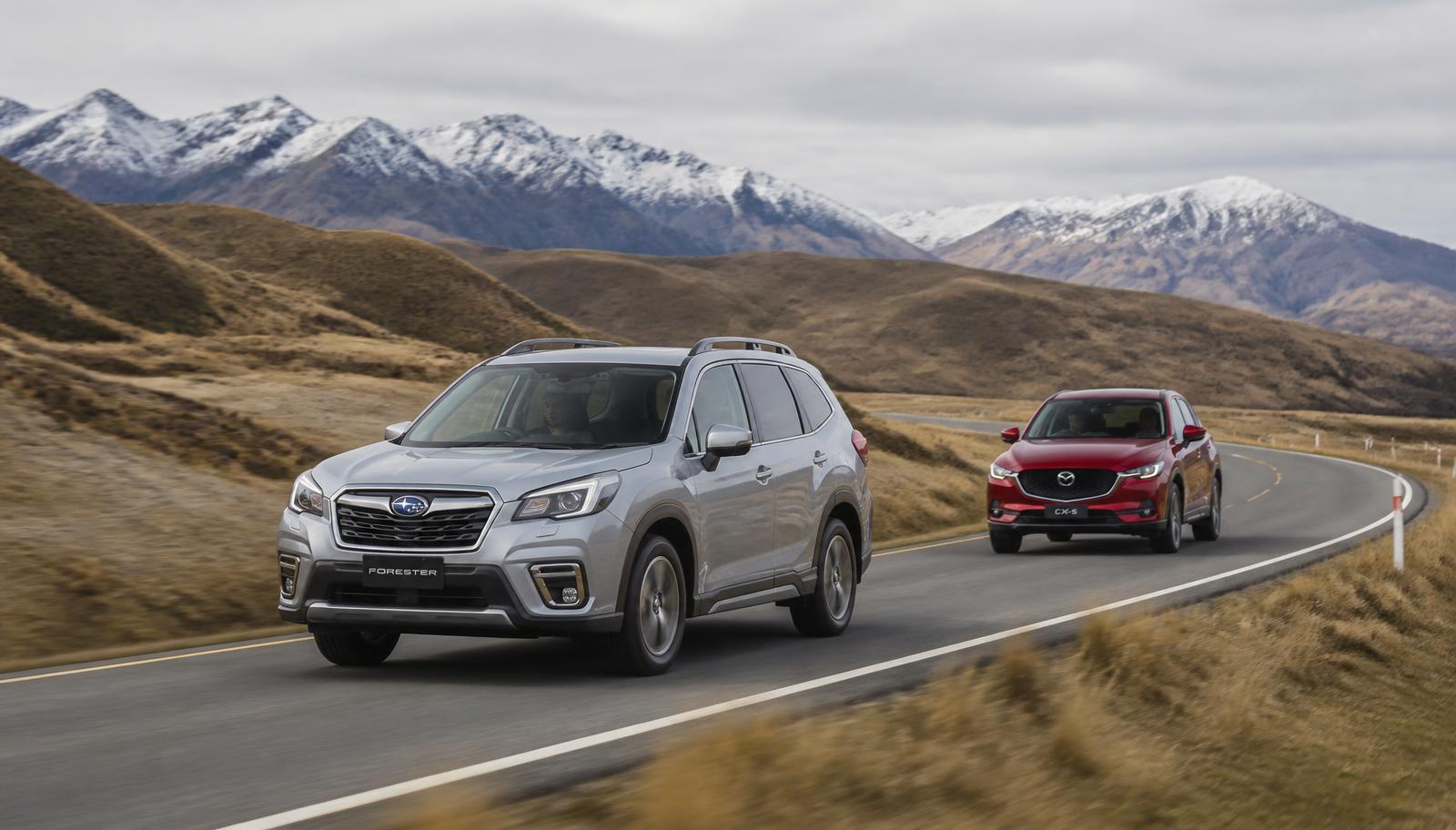
There isn't one best SUV in New Zealand. There are plenty of good ones, but they don't all do the same job equally well.
Five or seven seats? Big boot or easier parking? Petrol, hybrid or diesel? And, just as importantly when you're buying used, which versions have a few things worth knowing about before you hand over the money?
What follows is a shortlist of six SUVs you will genuinely find on the New Zealand used market, what separates them, and the sensible things to look at before you buy. This is about used vehicles across several generations — not a comparison of shiny new showroom models.
The short version
| Model | Seats | 7-seat option | Boot | Rear seat | Common fuel/drive | Best for |
|---|---|---|---|---|---|---|
| Mazda CX-5 | 5 | No | Generous for five seats | Comfortable for adults | Petrol, 2.2 diesel, 2WD/AWD | Buyers who want a nice place to sit and a tidy drive |
| Toyota RAV4 | 5 | No (modern gens) | Generous, very square and usable | Roomy, one of the better ones | Petrol, hybrid, 2WD/AWD | Low-fuss family ownership and strong resale |
| Honda CR-V | 5 (7 on some) | On some versions | Very practical, clever interior | Genuinely spacious | Petrol, some turbo petrol, 2WD/AWD | Maximum usable space inside a medium footprint |
| Mitsubishi Outlander | 5 or 7 | Yes, widely available | Good with five up, limited with seven | Fine for adults, third row for kids | Petrol, diesel, PHEV (5 seats), CVT common | Families who need seven seats without a big price jump |
| Nissan X-Trail | 5 or 7 | Yes, on some versions | Big and boxy | Good, with sliding rear seat on some | Petrol, some diesel, CVT common | Space per dollar |
| Subaru Forester | 5 | No | Practical, easy to load | Roomy, excellent visibility | Petrol, AWD as standard | Gravel roads, towing a small trailer, poor weather |
All six can be good buys, but the badge on the bonnet matters less than the particular version, its history and the condition of the car in front of you.
Mazda CX-5
Why consider it?
The CX-5 is one of the most common medium SUVs in the country, which works in your favour: plenty of choice, competitive pricing and easy parts supply. It is also the one that feels the most car-like to drive. Interiors, particularly on later models, sit above what you would expect at the price, and it has aged well in a market where "reasonably nice inside" often costs a lot extra.
Practicality
Five seats only — there is no seven-seat CX-5, so if the third row is non-negotiable, it is out. As a five-seater it is good: the boot is generous for the class, the rear seats are comfortable for adults on a longer trip, and the load floor is easy to use. It is a strong family car for a family of four or five, not a people mover in disguise.
If you are weighing it directly against the Toyota, we ran the numbers on both in Mazda CX-5 vs Toyota RAV4.
Petrol or diesel?
The 2.2 diesel deserves its own paragraph. Used diesel CX-5s can look extremely tempting because they are often noticeably cheaper than comparable petrol versions. There is a reason the market is cautious.
The diesel has a more complicated reliability history than the petrol engines, including problems associated with its emissions system, fuel getting into the engine oil, and reported turbo and camshaft issues. None of that means every diesel CX-5 is doomed, but it does mean a cheap one can become an expensive one very quickly.
For the average used buyer who simply wants a dependable CX-5, we would favour the petrol. If you specifically want the diesel, buy on service history and condition rather than price alone and have it properly inspected. None of this applies to the petrol CX-5s, which are a much more straightforward proposition.
The other decision is two-wheel drive or all-wheel drive. AWD is useful on gravel and in poor weather; if you never leave sealed roads, the two-wheel drive versions are simpler and generally cheaper.
What to check
- AWD versions: look underneath the rear for wetness or oily residue around the unit between the rear wheels (the rear differential), and listen on the test drive for humming, whining or rumbling from the rear that rises with road speed. It holds only a small amount of oil, so even a modest leak matters more than it looks like it should — have anything suspicious investigated before you buy. This is not a fault every AWD CX-5 has.
- 2.2 diesel: insist on a strong, documented service history.
- 2.2 diesel: check the oil. An unexpectedly high oil level is a warning sign here, because fuel can contaminate the oil.
- 2.2 diesel: warning lights, excessive smoke, rough running or evidence of repeated emissions-system trouble all deserve investigation, and a proper pre-purchase inspection is strongly recommended.
Toyota RAV4
Why consider it?
The RAV4 is the obvious choice for a reason. It is roomy, widely available, holds its value well and there are plenty of petrol and hybrid options on the used market. That popularity also means you can pay more for a comparable RAV4 than some of its rivals.
Hybrids often command more money than an equivalent petrol model and make the most of their fuel-saving advantage around town. On long open-road runs the advantage narrows.
Practicality
Five seats. Modern generations do not offer a third row in New Zealand, so treat it as a five-seat family SUV. The boot is one of the better ones here — square, deep and easy to pack. Rear-seat room is good, comfortably fine for adults, and the doors open wide enough to make a child seat less of a wrestling match than it is in some rivals.
Which versions are worth knowing about?
Petrol or hybrid is the main choice, then two-wheel drive versus all-wheel drive, and NZ-new versus Japanese import — imports often present very well for the money, but check the specification carefully as it can differ from the NZ-new equivalent.
What to check
- Some 2013–2015 RAV4 automatics have a documented light-throttle shudder issue. On a 2013–2015 automatic, accelerate gently at normal suburban speed and feel for an unusual vibration or shudder. If you feel one, have it investigated. Plenty of cars from those years are perfectly fine.
- On an older hybrid, ask whether the hybrid battery has ever been tested or replaced. If you're seriously considering the car, a hybrid battery health check is far more useful than trying to judge its condition from a short test drive.
- Check the service history for regular oil changes; on a car that is otherwise this low-drama, a neglected one is the main risk.
Honda CR-V
Why consider it?
Honda's strength has always been packaging — getting more usable space out of the same footprint than everyone else. The CR-V is the clearest example. Interior space, rear-seat room and boot usefulness are all above what the exterior size suggests, and the interiors tend to wear well.
Practicality
Most CR-Vs you will see are five-seaters, and that is where they are strongest. Some versions were offered with a third row; where that exists, treat it as occasional seating for children rather than a genuine seven-seat solution, and expect very little boot space left over when it is up. Rear-seat space in the five-seat layout is genuinely spacious, and the boot is one of the easier ones to load.
Which versions are worth knowing about?
Generations differ a lot here, more than with most of the others in this list. Older CR-Vs are simple naturally aspirated petrols. Later ones introduced a 1.5-litre turbo petrol. Both can be good buys, but they are different cars, so establish which one you are looking at before you start comparing prices.
What to check
- On 2017–2018 1.5 turbo versions, some markets had manufacturer updates relating to fuel getting into the engine oil. Check the service history and ask whether any relevant manufacturer updates apply to that particular vehicle. This does not apply to the other CR-V engines.
- On the test drive, it should pull away smoothly at low speed, without vibration or judder.
- Ask for the service history generally. On a Honda it is a good indicator of how the car has been treated.
Mitsubishi Outlander
Why consider it?
If seven seats matter and the budget does not stretch to a large SUV, the Outlander is usually the first place to look. It is one of the most affordable ways into a third row in New Zealand, and there are plenty of them about.
Practicality
Five and seven-seat versions both exist and both are common, so check which one you are looking at rather than assuming. The third row is best treated as occasional seating — fine for children on shorter trips, tight for adults. With all seven seats up, luggage space is limited to what you can fit behind the rear-most seats, which is not much more than a couple of shopping bags. With the third row folded flat it is a good, practical five-seat wagon.
Worth knowing: the plug-in hybrid (PHEV) versions are five-seat only. If you want the PHEV and seven seats, that combination does not exist in the used stock you will be looking at. The PHEV also uses a different drivetrain to the CVT petrol models, and suits people with off-street charging and a short commute.
What to check
- On 2016–2020 petrol Outlanders fitted with the relevant CVT, pay particular attention to how smoothly it accelerates. Some have a documented shudder/surge issue. Shaking, hesitation or the engine flaring without matching acceleration deserves investigation. Check the transmission service history.
- On seven-seaters, physically climb into the third row and put a bag in the boot behind it. The reality is more informative than any number.
- PHEV: battery capacity reduces with age and use. On an older example, don't rely on the dashboard's estimated electric range alone. Ask for evidence of battery condition and consider having the battery health checked before buying.
Nissan X-Trail
Why consider it?
The X-Trail typically gives you more space per dollar than most of this list. It is boxy in the useful sense — good headroom, a large square boot, and a rear seat that slides on some versions so you can trade legroom for luggage depending on the day.
Practicality
Five and seven-seat versions both exist depending on generation and specification, so confirm before you get attached. As with the Outlander, the third row is realistically child-sized seating, and using it takes most of the boot away. Rear-seat space in the second row is good, and the boot with five seats up is one of the more generous here.
Which versions are worth knowing about?
Petrol dominates the used market, with some diesel around depending on generation. Many X-Trails, both NZ-new and Japanese import, use a CVT automatic — but not all of them, and specification varies between import and NZ-new versions.
What to check
- On early T32 X-Trails, particularly around 2014–2016, give the CVT a proper test drive. Nissan documented CVT judder on certain T32 vehicles overseas, and service history matters on the NZ cars too. Acceleration should be smooth; shaking, hesitation or delayed response deserves investigation.
- Check the transmission service history for the exact vehicle rather than assuming every T32 is the same.
- On imports, check the odometer verification and the compliance paperwork alongside everything else.
Subaru Forester
Why consider it?
The Forester has a following in New Zealand for practical reasons rather than fashionable ones. All-wheel drive comes standard, visibility is excellent, and it is composed on gravel, in rain and on the sort of back road that makes other SUVs feel nervous. If you live rurally, tow a small trailer or boat, or spend winters somewhere cold, it earns its place.
Practicality
Five seats, no third row. The boot is practical with a low, flat load lip that makes heavy things easier to lift in, and rear-seat room is good. The big glasshouse makes it feel roomier than the numbers suggest and makes parking easier, which matters more day to day than most spec sheets admit.
What to check
- On 2011–2014 2.5-litre Foresters in particular, ask whether the engine has needed oil added between services. Some vehicles from this period were covered by an overseas manufacturer programme relating to excessive oil consumption. NZ and Japanese-import specifications can differ, so treat it as a question to ask rather than a given.
- Pull the dipstick yourself and look at the level and condition of the oil, and look for blue or blue-grey smoke from the exhaust, especially under acceleration or after the car has sat. Ordinary black soot around the tailpipe on its own does not tell you much.
- Ask for the service history and look for consistent, on-time oil changes. If you suspect the car is using oil, get it inspected before you buy.
A word on recalls
Recall and manufacturer campaign eligibility depends on model year, specification, market and often the individual VIN. An overseas recall does not automatically apply to a New Zealand-new or Japanese-import vehicle, and two cars that look identical on a listing can have different histories.
Check the specific vehicle rather than the model. Manufacturer New Zealand websites will run a VIN check, and the NZTA vehicle recall search is worth five minutes before you commit. If work has been done, ask for the paperwork.
So, which would we shortlist?
- Mazda CX-5: if driving feel and a nicer interior matter and five seats are enough, we'd have the petrol CX-5 high on the list.
- Toyota RAV4: if low-fuss ownership and resale matter more than getting the cheapest SUV for your money, the RAV4 is hard to ignore.
- Honda CR-V: if interior space is the priority, definitely shortlist the CR-V.
- Mitsubishi Outlander: if you genuinely need seven seats on a sensible budget, the Outlander is an obvious place to start.
- Nissan X-Trail: if you're chasing maximum space for the money, the X-Trail is worth a look — just pay attention to the CVT history on T32 models.
- Subaru Forester: if AWD, gravel-road ability and visibility matter, the Forester makes a lot of sense.
And if two of these are still tied after all that, the deciding factor is almost never the model. It is the individual car — its history, its condition and how it has been looked after.
Narrowed it down? Now skip the scrolling.
Once you know what you're looking for, you shouldn't have to spend your evenings opening listings one at a time.
Tell AutoMatch what you're looking for and let the dealer network respond with suitable vehicles.
Related reading
Do you really need a ute to tow a boat?
Looking for the best tow vehicle in NZ? Before buying a ute, work out what your boat really weighs. We compare wagons, SUVs, utes, hybrids and EVs for Kiwi towing.
Best station wagons in NZ 2026: 7 used wagons worth buying
Seven used station wagons compared for price, boot space, rear-seat room, fuel economy, safety and everyday practicality in New Zealand.
Best cars for older drivers in New Zealand
Easy to get into, easy to see out of, easy to park and easy to own. Six vehicles worth a look on the New Zealand market, plus the features and checks that actually matter.