

Buying advice
Best station wagons in NZ 2026: 7 used wagons worth buying
17 min read
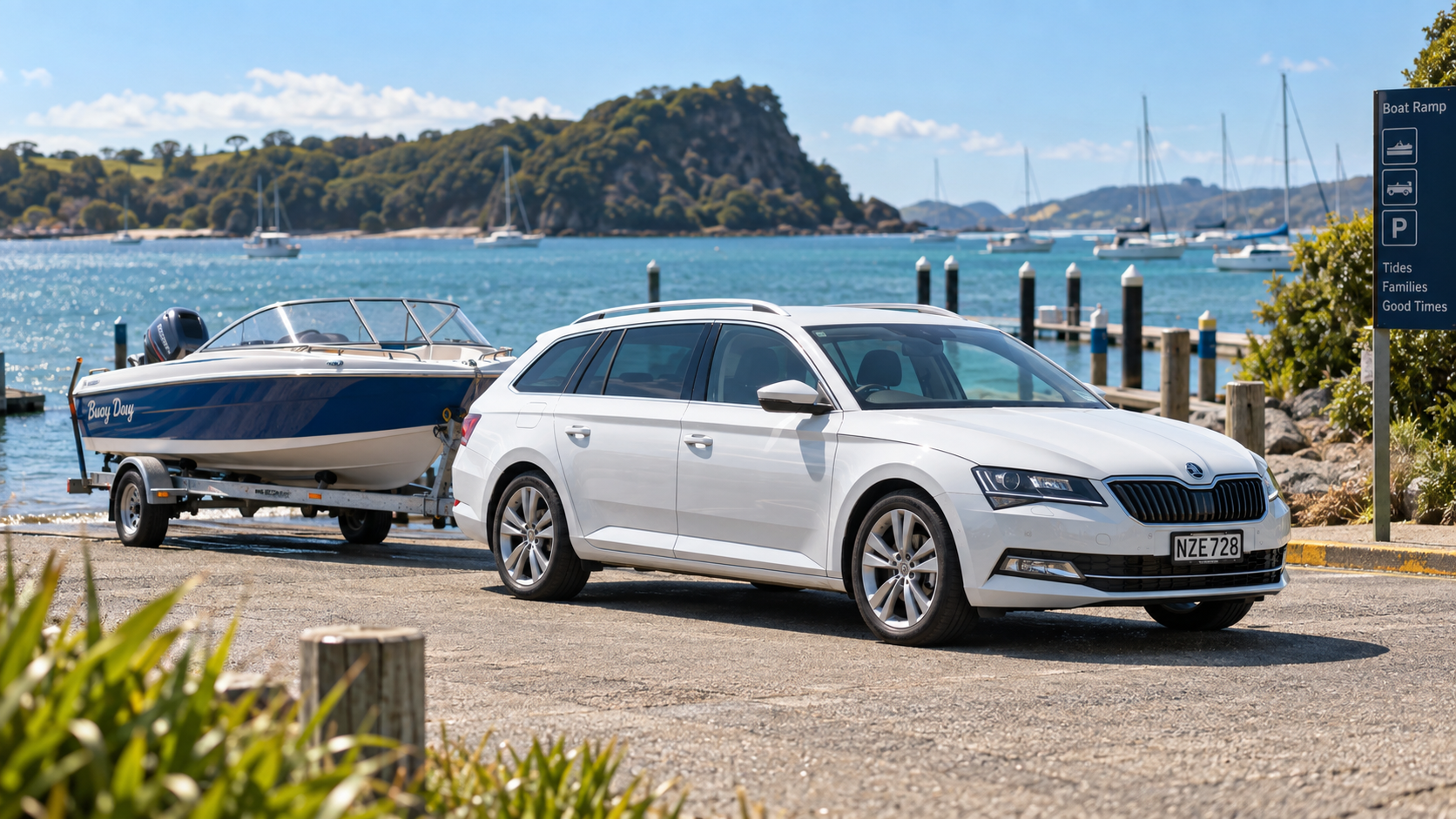
New Zealand fell rather hard for the SUV.
Somewhere along the way we seem to have decided a family car needs black wheel-arch cladding, a raised driving position and enough ground clearance to tackle terrain most of us encounter only when mounting the kerb outside school.
The station wagon never stopped making sense. We just stopped buying as many of them.
And that has created an interesting used-car market.
If what you actually need is room for children, rear-seat passengers, luggage, a dog, bikes or the accumulated debris of family life, a good wagon can offer SUV-rivalling practicality while generally sitting lower, driving more like a car and — depending on what you buy — using considerably less fuel.
That doesn't mean everyone should abandon SUVs. Higher seats make getting in and out easier for some people. Extra ground clearance genuinely matters on rough roads. Some SUVs tow more, and plenty of buyers simply prefer sitting higher.
But if you're looking for the best station wagon in NZ, it's worth asking the opposite question too:
We looked at the current New Zealand used market and picked seven wagons that make a particularly strong case.
The best used station wagons in NZ at a glance
| Wagon | Best for | Used-market territory* | Boot space | Rear-seat room | What to know |
|---|---|---|---|---|---|
| Toyota Corolla Fielder Hybrid | Low running costs | ~$13k–$19k | 407L | Good, but narrow | Check hybrid battery health |
| Honda Shuttle Hybrid | Clever packaging | ~$12k–$18k | Up to 570L** | Very good for its size | Check DCT operation carefully |
| Subaru Levorg 2.0 GT-S | Fast AWD wagon | ~$15k–$22k | Around 500L | Good | Service history matters |
| Mazda6/Atenza petrol wagon | All-round family use | ~$20k–$30k | 506L | Good | We'd choose petrol over diesel |
| Škoda Octavia 1.4 Style Wagon | Family sweet spot | ~$19k upwards | 640L | Excellent | 2021+ Style gets a conventional 8-speed auto |
| Škoda Superb Wagon | Maximum space | ~$23k upwards | 660L | Enormous | Buy on service history |
| Subaru Outback 2.5 | Wagon meets soft-roader | ~$13k–$25k | Useful rather than class-leading | Very good | Check oil use and leaks |
*Indicative asking-price territory from New Zealand used-car listings reviewed in September 2026. Year, kilometres, specification, condition and import history make a substantial difference.
*Honda's quoted 570L figure includes 30L of underfloor storage.*
Toyota Corolla Fielder Hybrid — the sensible one
There are cars you buy with your heart, and there are cars you buy because you'd quite like to stop giving money to petrol stations.
The Corolla Fielder Hybrid belongs firmly in the second camp.
A 2015–2019 hybrid will generally put you somewhere in the low-to-high teens depending on kilometres, trim and condition. AutoTrader's NZ used-car review puts luggage capacity at 407 litres and says around 4.0L/100km is achievable without much effort.[1]
That isn't enormous by wagon standards, but it's a useful step up from the little hatchbacks that share similar Toyota hybrid hardware.
The back seat is perfectly workable for normal family duty. Its limitation is width rather than legroom: the Fielder is a relatively narrow car, and regularly carrying three adults across the back isn't really its party trick.
Then again, almost nothing about a Fielder suggests parties.
What we'd check
Hybrid battery health matters as these cars age. Look for warning lights, unusually rapid charging and discharging, or disappointing fuel economy.
Also check what the car did in Japan — and what it has done since arriving here. Fielders appeal to couriers and commercial users for exactly the same reasons they appeal to families, so suspension wear, interior condition and evidence of a hard working life are worth looking for.
Why we'd buy one
Because it gets the fundamentals right.
It's economical, practical, familiar to NZ workshops and doesn't require you to spend $30,000 to avoid driving a hatchback.
It may also be one of the few cars improved by having absolutely no aspirations whatsoever.
Honda Shuttle Hybrid — the packaging genius
The Honda Shuttle is what happens when someone treats interior space as an engineering problem rather than a styling opportunity.
It isn't large. It isn't imposing. Nobody is likely to turn around for one in the supermarket car park.
But the numbers are rather good.
Honda quotes 570 litres of luggage capacity with all five seats in use, including 30 litres beneath the floor. Fold the rear seats and that becomes 1,141 litres, with up to 1.84 metres of load length.[2]
For a car only about 4.4 metres long, that's clever.
Rear accommodation is another strength. The cabin makes very good use of its exterior dimensions and the relatively accommodating rear floor makes the middle seat more useful than it is in many AWD wagons.
NZ used examples are abundant enough that you can afford to be selective rather than buying the first one you see.
What we'd check
The hybrid Shuttle uses Honda's Sport Hybrid i-DCD system with a seven-speed dual-clutch transmission, rather than Toyota's simpler planetary-style hybrid transmission.
That doesn't make every Shuttle a problem waiting to happen, but it does make the test drive important. Pay attention to pulling away from rest, stop-start crawling and low-speed manoeuvring. Hesitation, shuddering or clumsy engagement deserves further investigation.[3]
Battery condition matters too.
And look in the back. A vehicle this practical may have spent several years proving it.
Why we'd buy one
Because it extracts a ridiculous amount of usefulness from a fairly small car.
For urban families wanting good rear space, a big square load area and low fuel use, the Shuttle makes a compelling argument for not buying a crossover simply because everyone else did.
Subaru Levorg 2.0 GT-S — the one for people who haven't given up
The Levorg also came with a 1.6-litre turbo.
It's perfectly sensible.
Moving on.
The Levorg we're interested in is the 2.0 GT-S.
Its FA20 turbo engine produces 221kW and 400Nm, driving all four wheels.[4]
Suddenly the practical family wagon has become considerably less responsible.
Current 2.0 GT-S examples in NZ can still be found in the mid-to-high teens, although really tidy examples and STI Sport versions can push higher. Current NZ listings reviewed for this article place them broadly in that territory depending on kilometres and specification.[5]
It's not the roomiest wagon here, but rear-seat space is good for two adults and the luggage area is properly useful. The AWD driveline does mean a more intrusive centre tunnel than you'll find in something like the Shuttle.
Its ANCAP result also needs context. The Levorg carries a 2016 ANCAP datestamp, covering both 1.6- and 2.0-litre versions. AEB and lane-support technology were standard under that assessment.[6]
That's a good result — under 2016 criteria.
What we'd check
Service history.
A 300-horsepower turbocharged AWD wagon isn't where we'd go shopping for evidence that the previous owner considered oil changes optional.
The CVT should operate smoothly, fluids should have been changed properly, and modifications deserve scrutiny rather than admiration.
The 2.0 GT-S isn't inherently something to avoid. It's simply a car where buying the best-maintained example matters more than saving the last $1,500.
Why we'd buy one
Because family practicality does not require surrender.
If you're going to spend years carrying children, luggage and supermarket bags, you are still allowed to enjoy the bit between your driveway and the supermarket.
Mazda6 / Atenza petrol wagon — the handsome all-rounder
The Mazda6 wagon may be the easiest car here to recommend to someone who doesn't particularly want to explain their choice.
It looks good. It drives well. It has a conventional six-speed automatic. There are naturally aspirated petrol engines available, and the cabin feels like Mazda expected adults to spend time in it.
It also carries more than its shape suggests.
Mazda's NZ specifications put luggage capacity at 506 litres with the seats up and 1,648 litres folded.[7]
Rear legroom is good rather than exceptional. Two adults are comfortable, although a tall passenger behind a tall driver won't have the almost comical room available in the Superb.
Petrol. We'd buy the petrol.
You'll also find 2.2-litre Skyactiv-D diesel Mazda6 wagons.
We wouldn't make one our default recommendation.
The diesel has great torque and attractive economy on paper, but there is enough documented history around carbon accumulation and related engine issues to make the petrol the easier recommendation for a normal used buyer. Australian authorities recalled affected 2012–2018 Mazda3, Mazda6 and CX-5 diesels over carbon build-up and premature wear of certain engine components.[8]
That doesn't mean every Mazda diesel is about to explode.
It does mean there are plenty of good petrol Mazda6 wagons available, so we don't see a compelling reason to make life more complicated.
A 2019 2.0-litre petrol Atenza wagon reviewed during our NZ market research showed 6.7L/100km on its energy-economy information.[9]
Safety year matters here
This is also a perfect example of why we don't simply write “five-star ANCAP” and move on.
The updated Mazda6 built from June 2018 was assessed under 2018 ANCAP criteria, with city, interurban and vulnerable-road-user AEB plus lane-keep assistance standard across the assessed range.[10]
Older third-generation cars carry an earlier assessment.
Same basic shape. Same Mazda6 badge.
Different context behind the stars.
Why we'd buy one
Because it's a proper family car that doesn't look or drive like it was designed by committee around the phrase active lifestyle.
Also, 506 litres.
You may discover your family didn't need an SUV after all. It just needed a boot.
Škoda Octavia 1.4 Style Wagon — possibly all the family car most people need
Here is where the SUV argument starts getting awkward.
The Octavia Wagon has a 640-litre boot.
With five people aboard.
Fold the rear seats and it becomes 1,700 litres.[11]
So if the reason you're shopping for a medium SUV is “we've got kids and need heaps of space”, the Octavia would like 640 litres of rebuttal.
It doesn't achieve that by making the back seat miserable either. Rear passenger room is excellent, and an NZ road test of the fourth-generation Style found genuine room for three across the rear.[12]
The particular Octavia we'd look for
For a mainstream used buyer, the 2021-on 1.4 TSI Style is especially interesting.
It has 110kW and 250Nm, but more importantly for anyone already muttering something about European transmissions, the NZ-new Style uses a conventional eight-speed torque-converter automatic.
Not a DSG.[12]
The faster RS uses the seven-speed dual-clutch transmission.
That makes the Style a rather interesting used proposition: a roomy European wagon with strong economy, plenty of equipment and without one of the mechanical complications some cautious buyers immediately associate with VW Group cars.
The 2021–2024 cars carry a 2019 ANCAP datestamp; later updated models have since been reassessed under newer protocols.[13]
But isn't it European?
Yes.
Geography isn't a mechanical fault.
A Škoda is not automatically unreliable because somebody once owned a temperamental 1998 Audi.
What does matter is complexity and maintenance.
Turbocharged engines, electronic systems and — on some variants — DSG gearboxes can create bigger repair bills than a Corolla if they've been neglected.
That's why we'd favour this relatively straightforward 1.4 Style and insist on a documented service history.
Why we'd buy one
This may be the sweet spot of the entire list.
It isn't enormous outside. It is borderline ridiculous inside. It uses less fuel than its carrying capacity suggests and drives like a normal car because, inconveniently for SUV marketing departments, that's what it is.
Škoda Superb Wagon — when your children apparently require business-class legroom
The Superb does not so much provide rear legroom as issue each passenger a small tenancy agreement.
This is a properly big wagon.
The 2015–2024 Superb Combi offers 660 litres of luggage space, expanding to 1,950 litres with the rear seats down.[14]
Škoda's launch material quoted rear kneeroom of 157mm and described it as roughly twice that of its next-best competitor at the time.[15]
In other words, if a six-foot teenager complains about being cramped in the back, the problem may not be the car.
Used NZ examples vary enormously in price because kilometres and specification matter. Current listings reviewed for this article place useful examples broadly from the low-$20,000s upward.[16]
The European caveat belongs here
Unlike the Octavia Style above, the Superb commonly brings more VW Group complexity with it.
Depending on variant, you're dealing with DSG transmissions, turbocharging and sometimes AWD.
None of those things is inherently terrifying.
But a Superb with a complete service history is far more attractive than one accompanied by:
“Yeah bro, pretty sure the old owner serviced it.”
The price of getting neglected European hardware back onto speaking terms with itself can erase a bargain remarkably quickly.
We'd check the exact transmission, make sure its required servicing has been carried out, check AWD servicing where applicable, scan the electronics and give the cooling system a proper inspection.
Why we'd buy one
Because if your principal reason for buying an SUV is space, the Superb is deeply inconvenient evidence.
It will swallow a family and their luggage without needing to impersonate an off-road vehicle.
Subaru Outback 2.5 — for people who actually might leave the tarmac
Or at least have a ski-club membership.
The Outback is the middle ground.
Technically, ANCAP classifies this generation as a large SUV. Philosophically, though, it remains much closer to a raised AWD wagon than the upright crossovers that now dominate family-car sales.
And unlike most of the cars above, its extra ride height can actually be useful.
The 2015–2020 generation has around 213mm of ground clearance, proper Subaru all-wheel drive and a long wagon-shaped body.[17]
That's enough to make rough gravel roads, snow, ski-field access tracks and uneven rural driveways considerably less theoretical.
For plenty of New Zealanders, that is probably all the off-road ability they ever needed in the first place.
What about Subaru head gaskets?
Subaru’s older EJ-series 2.5 had such a reputation for head gaskets that the repair almost qualified as scheduled maintenance.
Fortunately, the later FB25 used in this generation of Outback is a materially better bet.
That doesn't mean we would stop looking under the bonnet.
The later engine has its own things worth checking, particularly oil consumption and oil leakage. Any higher-kilometre example deserves a careful inspection for oil use between services and evidence of leaks.[18]
So we'd look for evidence of regular maintenance, ask whether oil needs topping up between services, inspect for leaks and make sure the CVT behaves cleanly.
Safety
The January 2015–March 2021 generation carries a 2015 ANCAP datestamp, applying to all variants.[19]
Again, five stars under the applicable standard of its time — not five eternal stars preserved in amber.
Why we'd buy one
If you genuinely spend weekends up unsealed roads, travel to the snow, encounter bad rural access or simply need extra clearance, the Outback makes sense.
If your off-road requirement is the speed bump outside Westfield, buy the Octavia.
So, station wagon or SUV?
There are perfectly good reasons to buy an SUV.
You may need genuine ground clearance. You might regularly travel rough roads. You may find the higher seating position easier to get in and out of. Some SUVs tow more, and the extra height of their luggage areas can make genuinely bulky objects easier to carry.
But “I need space” is not automatically an SUV argument.
The Octavia gives you 640 litres behind five seats.
The Superb gives you 660.
The Shuttle extracts an extraordinary amount of carrying capacity from a relatively tiny footprint.
The Fielder can give you wagon practicality while returning around four litres per 100km.
And the Levorg can carry the family while quietly producing 221kW.
The Outback even covers the person who genuinely does need some ground clearance.
Which leaves quite a large group of SUV buyers whose principal off-road activity involves occasionally parking on grass.
The interesting question isn't whether wagons are better than SUVs.
It's whether we stopped asking which body style actually suited us.
Which used station wagon would we choose?
There isn't one answer because these cars aren't doing the same job.
For low running costs: Toyota Corolla Fielder Hybrid.
For clever family packaging: Honda Shuttle Hybrid.
For AWD and performance: Subaru Levorg 2.0 GT-S.
For the conventional family all-rounder: Mazda6/Atenza petrol wagon.
For the best blend of manageable size and enormous practicality: Škoda Octavia 1.4 Style Wagon.
For unapologetic passenger and luggage space: Škoda Superb Wagon.
For gravel roads, snow and people who genuinely need some extra clearance: Subaru Outback 2.5.
And that's really the point.
There isn't one best wagon.
There is, however, a pretty good chance there's a wagon that does the job you were about to buy an SUV for.
A note about safety ratings
We deliberately haven't treated every five-star badge as equivalent.
Vehicle safety testing changes over time. ANCAP's criteria have progressively become more demanding, while many older vehicles in New Zealand eventually move onto Used Car Safety Ratings based on real-world crash data.
NZTA specifically notes that vehicles are rated under different systems and that safety ratings change over time.[20]
So when comparing used cars, look beyond the stars.
Check the rating system, assessment year, actual safety equipment fitted and the current rating for that vehicle on Rightcar.
A five-star result earned in 2015 tells you something useful.
It does not mean exactly the same thing as five stars earned under a much newer assessment.
About our research
This guide is written for New Zealand used-car buyers.
Indicative pricing is based on a sample of current New Zealand dealer and marketplace advertisements reviewed in September 2026. These are asking prices rather than recorded sale prices and should be treated as a guide only.
Fuel-economy figures use NZ energy-economy information or manufacturer figures where appropriate.
Boot capacities are manufacturer figures wherever possible. Manufacturers do not always measure cargo space in precisely the same way, so litres are useful for comparison but shouldn't be treated as a laboratory ranking.
Reliability comments apply to the specific generation, engine and transmission discussed, not simply to the badge on the bonnet. “Japanese” and “European” are not maintenance schedules.
For any vehicle you're seriously considering, check its current safety information on Rightcar, verify recall status and get an independent pre-purchase inspection.
Sources & references
- AutoTrader NZ — Toyota Corolla Fielder used-car review. Used for NZ pricing guidance, luggage capacity, fuel-economy context and used-buying considerations.
- Honda Motor Co. — Honda Shuttle launch specifications. Used for official luggage-capacity, underfloor-storage and load-length figures.
- Honda technical information / independent NZ used-vehicle guidance — Sport Hybrid i-DCD. Used for the seven-speed dual-clutch drivetrain and associated used-buying checks.
- Subaru Japan — Levorg 2.0 GT-S official specifications. Used for the FA20 turbo's 221kW and 400Nm outputs.
- NZ used-market listings sampled September 2026 — Subaru Levorg. Used only for current asking-price context.
- ANCAP — Subaru Levorg safety assessment. 2016 datestamp.
- Mazda Motors New Zealand — Mazda6 specifications. Used for official wagon luggage-capacity figures.
- Australian Government Vehicle Recalls — Mazda diesel recall covering affected Mazda3, Mazda6 and CX-5 vehicles. Used for documented carbon-accumulation and premature component-wear concerns.
- NZ used-market / energy-economy information — Mazda Atenza/6 petrol wagon. Used for contemporary NZ fuel-economy and pricing context.
- ANCAP — Mazda6 safety assessment. Used for the June 2018-on assessment under 2018 criteria and associated active-safety equipment.
- Škoda New Zealand — Octavia Wagon specifications. Used for official 640L/1,700L luggage figures.
- AutoTrader NZ — fourth-generation Škoda Octavia Style NZ road test. Used for NZ-specific drivetrain and rear-seat-space context.
- ANCAP — Škoda Octavia safety assessment. 2019 datestamp for the relevant vehicles.
- Škoda Auto — Superb Combi technical specifications. Used for official luggage-capacity figures.
- Škoda Auto — Superb launch technical information. Used for rear-seat kneeroom and cabin-space context.
- NZ used-market advertisements sampled September 2026 — Škoda Superb. Used only for current asking-price context.
- Subaru official technical information — Outback. Used for the previous-generation Outback's approximately 213mm ground clearance.
- Independent used Subaru technical/ownership guidance — fifth-generation Outback. Used for FB25 oil-consumption and oil-leak considerations.
- ANCAP — Subaru Outback safety assessment. 2015 datestamp for January 2015–March 2021 vehicles.
- NZ Transport Agency Waka Kotahi / Rightcar — vehicle safety-rating guidance. Used for NZ safety-rating methodology and the fact that safety ratings can change over time.
Know what you're looking for?
Tell AutoMatch what you want and let relevant dealers respond.
Related reading
Best cars for older drivers in New Zealand
Easy to get into, easy to see out of, easy to park and easy to own. Six vehicles worth a look on the New Zealand market, plus the features and checks that actually matter.
Best SUVs to buy in New Zealand
Six SUVs you will actually find on the New Zealand used market — CX-5, RAV4, CR-V, Outlander, X-Trail and Forester — what each one is genuinely good at, and what to check before you hand over the money.
Buying privately or from a dealer: which is the smarter way to buy a used car?
The Consumer Guarantees Act, warranties, finance, trade-ins, negotiation and real mechanical risk — what each route actually costs, and which buyers each one suits.